
Well pump pressure switch problems: signs and next steps
By Bonner County Well Repair Guide Editorial Team · Updated 2026-09-17
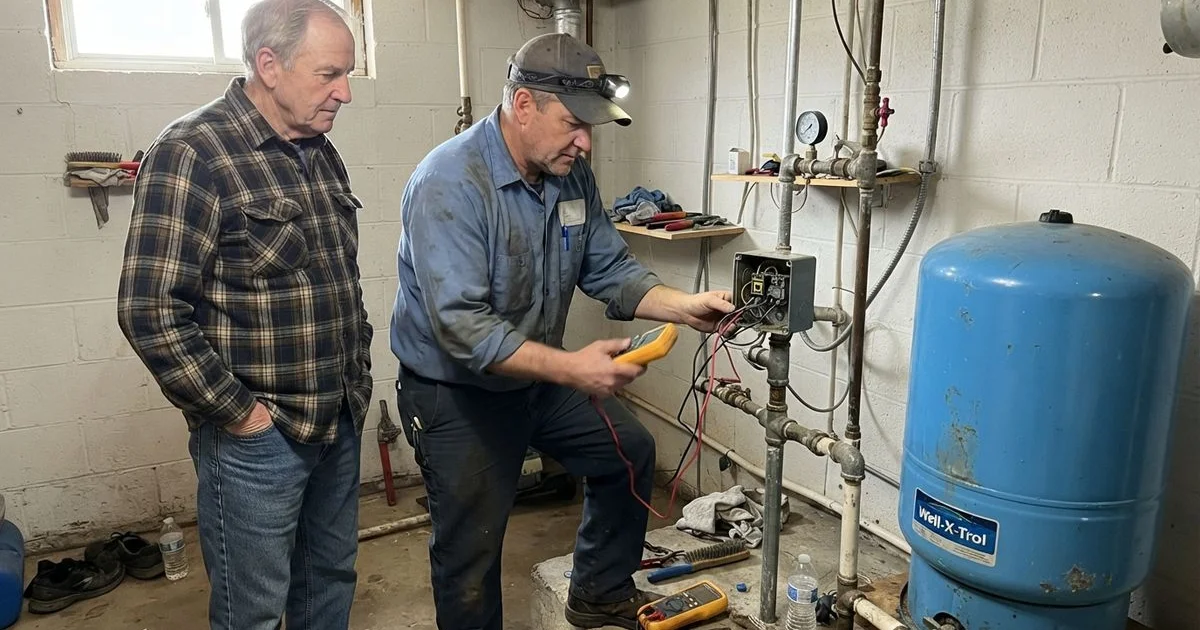
This is general information, not professional advice. Pressure switches carry household voltage. Turn power off at the breaker and use a qualified provider for any electrical work.
Searches about well pump pressure switches are among the highest-volume in this field, which tells you how often people land here: the water has stopped, or the pump will not quit, and the switch is a prime suspect. It often is, but not always. This guide covers how the switch fits in, what failure looks like and how to decide whether to call someone.
What the switch does
The switch is the system’s decision maker. It watches pressure and starts the pump when pressure falls to a lower setting, then stops it when pressure reaches an upper setting. Common residential pairs are 30/50 and 40/60 psi. Because it opens and closes under electrical load thousands of times, the contacts wear, pit and eventually stick or fail.
Symptoms and what they point to
| Symptom | What it suggests | Urgency |
|---|---|---|
| No water, pump silent | Switch contacts open, tripped breaker, or a pump or motor fault | High, check the breaker first |
| Pump runs and will not shut off | Welded contacts, bad adjustment, a leak, or a failing pump | High, running nonstop adds wear |
| Rapid clicking on and off | Waterlogged tank, switch chatter, or a tank fault | Medium to high |
| Pressure much higher or lower than usual | Switch setting drifted or a diaphragm problem | Medium |
| Burnt smell or visible scorch marks | Electrical damage in the switch | Turn off power and call |
Notice that several of these overlap with tank and pump problems. That is why a guess can cost you money: replacing a switch that was never the issue only delays the real repair.
What a technician will check
A proper diagnosis usually goes in this order:
- Confirm power at the breaker and at the switch.
- Compare the gauge reading with the switch’s cut-in and cut-out points.
- Inspect the contacts for pitting, burning or debris, including insects in the switch housing.
- Look at the pressure tank’s air charge, since a bad tank can make a good switch behave badly.
- Measure motor amp draw if the pump is suspect.
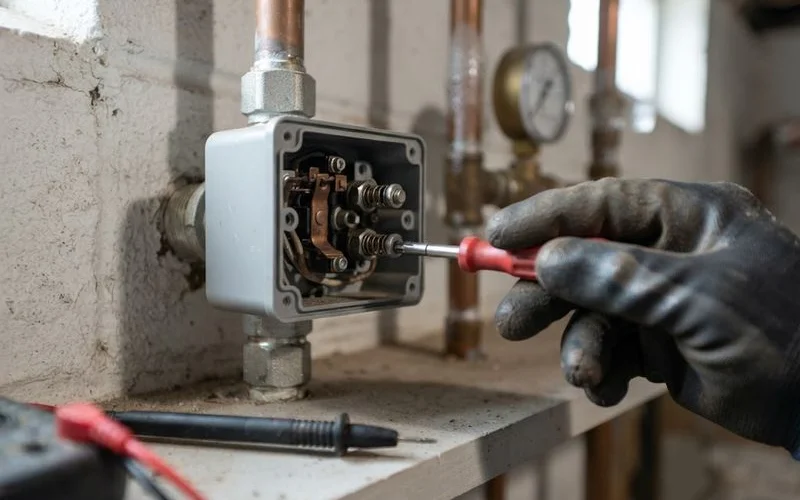
The switch itself is an inexpensive part compared with the pump. The labor and the trip are usually the larger share of the bill, so ask whether the technician will also check the tank and the wiring while they are on site.
Simple things worth ruling out first
Before you call, you can safely look at a few items. Check that the breaker has not tripped. Note the gauge reading when the pump kicks on and off. Make sure no tap or hose is running. If the breaker has tripped more than once, leave it off and call, since repeated resets can damage the motor. The guide on what you can check yourself and when to hire a pro draws that line in more detail.
Why not just adjust the settings
You may see advice online to crank the adjustment nuts for more pressure. Higher settings can overstress the tank, plumbing and fixtures, and they will not fix a switch that is failing. If the pressure you want is outside the pump’s rating, that is a conversation to have with a provider, not a guess to make at the switch.
Choosing who to call
Pressure switch work is routine for well service companies, and reviewers of local providers frequently say that crews explain the problem and the steps before starting. Treat that as one thing to look for rather than a guarantee. You can browse well pump repair and replacement providers in Bonner County and compare what reviewers report. Our methodology page explains how listings are scored, and the home page is the best place to start a fresh search.
If your symptoms include burning smells, sparking or a wet pump area, leave the power off and arrange professional help right away.
FAQ
- What are the usual signs of a bad pressure switch?
- The pump will not start, will not shut off, clicks rapidly, or cycles at pressures that no longer match the gauge. Burned or pitted contacts and a chattering sound are also common.
- Can I replace a pressure switch myself?
- The switch carries line voltage and sits in a pressurized system. Even handy owners should be cautious, and anyone unsure should hire a qualified provider. Always cut power at the breaker first.
- Is the switch the same thing as the pressure tank?
- No. The tank stores water and an air cushion. The switch senses pressure and tells the pump when to run. They work together, and one can mask or mimic problems in the other.
- How do I know it is the switch and not the pump?
- A technician can test power, contact condition and amp draw to tell them apart. If the pump runs when the switch is bypassed by a professional, the switch is the likely culprit.