Getting your well pump ready for a North Idaho winter
By Bonner County Well Repair Guide Editorial Team · Updated 2026-10-06
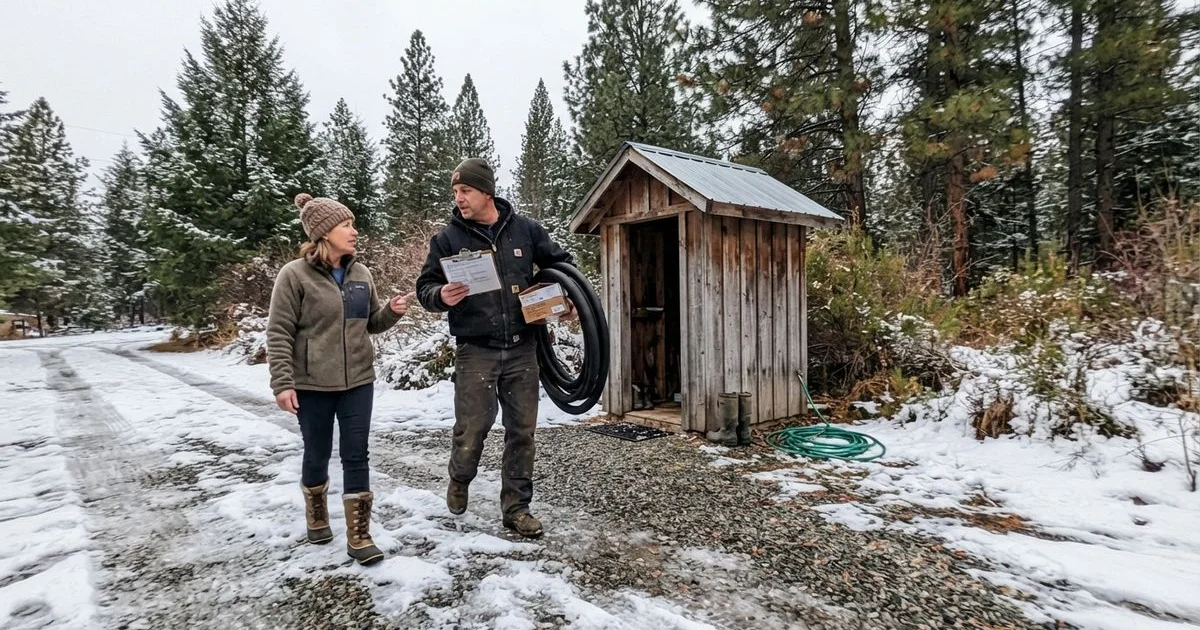
This is general information, not professional advice. Do not use open flames near pressure equipment, and use a qualified provider for electrical or pump work.
Bonner County winters are cold enough to turn a marginal well system into a no-water emergency. The good news is that most winter failures are preventable with an hour of looking around in October. Calls for help tend to bunch up during the first deep freeze, so the earlier you check, the more choice you have.
A fall walk-through
Do this when the weather is still mild.
| Item | What to look for | If something looks off |
|---|---|---|
| Pump house or enclosure | Gaps, damaged insulation, missing door seals | Seal and insulate, keep heat source safe and approved |
| Exposed pipe and fittings | Bare runs, cracked insulation, wet spots | Add proper pipe insulation or heat tape rated for the use |
| Pressure tank and gauge | Rust, leaks, steady pressure | Book a diagnosis if the pump cycles oddly |
| Pressure switch | Clean housing, no debris or nesting | Have a pro inspect if you see damage |
| Wellhead and cap | Secure cap, intact seal, drainage away from the casing | Call a provider before melt or heavy rain |
| Breaker and wiring | Firm connections, no scorching | Have an electrician or well provider inspect |
What freezing actually damages
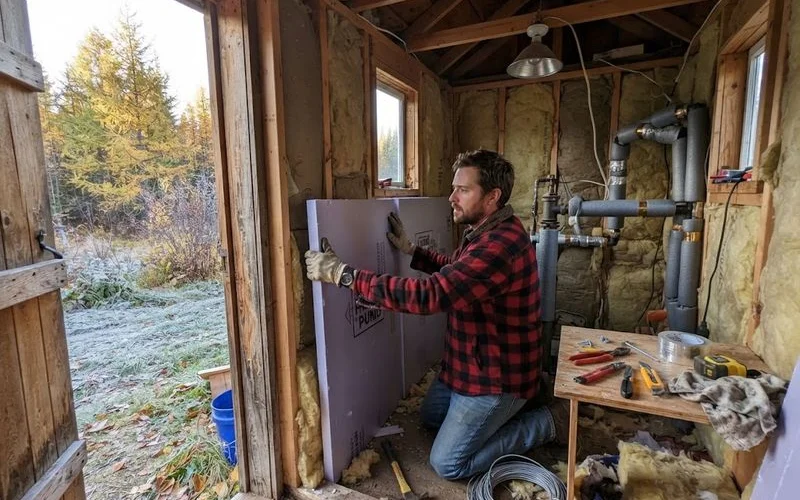
Water expands as it freezes, so the first casualties are fittings, small pipes, switches and tank connections. A frozen line may only slow flow at first, then split. A frozen pressure switch can leave the pump either running or silent. These are often repairable, but a burst line behind a wall is a bigger job.
If a pipe has frozen and you can reach it safely, thawing it slowly is the standard approach. Avoid open flames, and shut off the water supply if a split is suspected so thawing does not flood the space.
Signs your system is struggling in the cold
- pressure that fades overnight and recovers midday
- a pump that runs longer than usual
- ice or frost on fittings and the tank
- tripped breakers in cold snaps
Any of these is worth a call before the weather gets worse. Our guide to reading well pressure patterns can help you describe what you are seeing.
Heat sources, with caution
Heat tape and small heaters are common in pump houses, but they carry fire and shock risks if installed or used incorrectly. Use products rated for the purpose, follow instructions and have wiring checked if you are unsure. A heater that works only because it is overloaded is a hazard, not a fix.
Plan for the worst day
Keep a few jugs of water, know where your main shutoff and breaker are, and save the number of a provider you have already vetted. If you have not screened any, it is far easier on a mild October afternoon than at a freezing midnight. Reviewers of local providers often mention quick response, including on weekends, as something they valued, though availability is up to each company and should be confirmed directly.
When you want to look at who services your area, the well pump repair and replacement listings are a good place to browse. See how we sort them on our methodology page, or head to the home page to begin.
FAQ
- When should I prepare my well system for winter?
- Early autumn, before the first hard freeze, gives you time to schedule a visit if something looks wrong. Waiting for the first cold snap means competing with everyone else for appointments.
- What parts of a well system are most at risk from freezing?
- Exposed pipes, pressure switches, tanks and fittings in unheated pump houses, crawl spaces or garages. Anything that holds water and sits outside the heated envelope deserves a look.
- Should I keep a faucet dripping in a cold snap?
- A slow drip can help protect pipes in extreme cold, but it also keeps the pump running more. Ask a provider what suits your setup.
- What if I lose water in the middle of winter?
- Check the breaker and look for obvious frozen exposed lines. If you cannot find a simple cause, call a provider promptly and mention the temperature and what you checked.