
Well pump trouble: what you can check yourself and when to hire a pro
By Bonner County Well Repair Guide Editorial Team · Updated 2026-09-26
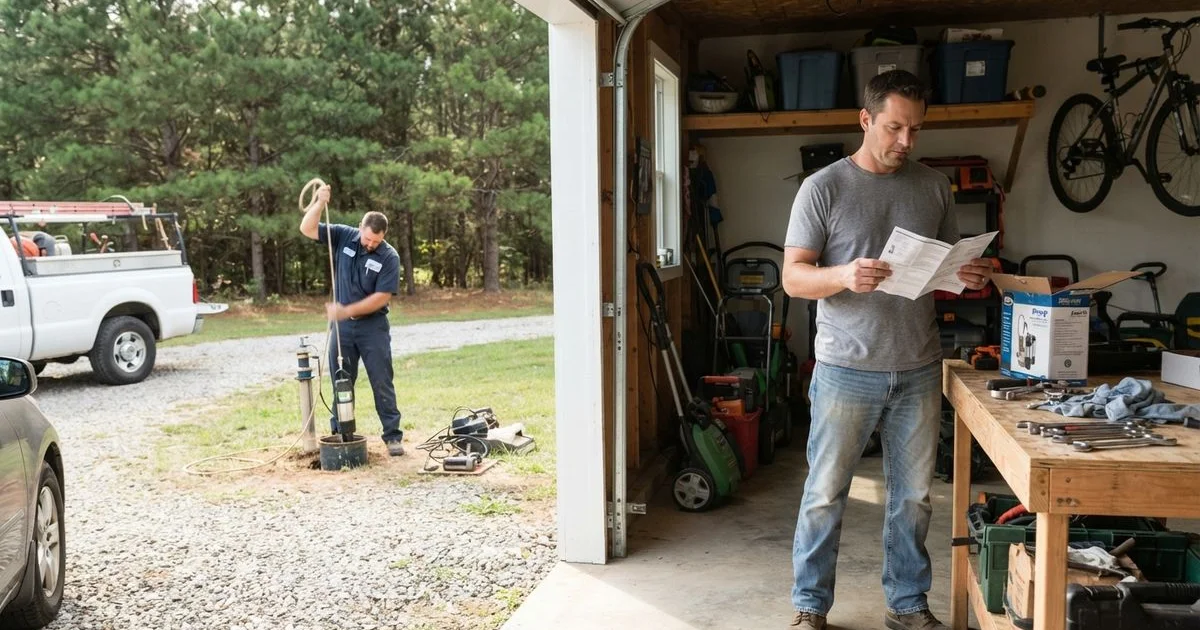
This is general information, not professional advice. Well systems combine electricity, water pressure and heavy equipment. If you are unsure, do not proceed.
Plenty of rural homeowners are handy, and for good reason: help is not always next door. That makes the DIY question real. Some well checks are safe, quick and useful. Others can injure you or turn a modest repair into an expensive one. This guide draws the line.
The safe checks
These steps open nothing and require no tools beyond a flashlight:
- Confirm the breaker. If it has tripped, reset it once. If it trips again, leave it off.
- Read the gauge. Note the pressure where the pump starts and stops.
- Look at the filter. A clogged sediment filter is a common and cheap cause of weak flow.
- Walk the line. Look for wet ground, hissing or puddles near the tank and pump house.
- Listen and time it. Record how often the pump cycles and whether it hums, clicks or runs nonstop.
Writing down what you see helps whoever you eventually call. Our guide on low water pressure from a well goes deeper on reading those patterns.
The work that belongs to a pro
| Task | DIY or pro | Reason |
|---|---|---|
| Resetting a tripped breaker once | DIY | Simple, but stop if it repeats |
| Replacing a clogged whole-house filter | DIY | Low risk, follow the filter instructions |
| Checking tank air charge | Either, with care | Needs a gauge and the system drained of pressure |
| Replacing a pressure switch | Pro recommended | Line voltage and pressurized plumbing |
| Testing amp draw or capacitor | Pro | Requires meter and electrical knowledge |
| Pulling a submersible pump | Pro | Weight, depth, risk of dropping the pump or damaging wire |
| Well casing or pitless adapter work | Pro | Contamination risk and specialized fittings |
Why the cheap fix can cost more
A common pattern: someone replaces the pump after the water stops, only to find the real culprit was the switch, the capacitor or a tripped breaker. The reverse also happens. A cheap part swap hides a failing pump that dies a month later. Switch trouble is the most common of these, and the pressure switch problems guide lists the symptoms. Diagnosis matters more than the part, which is why many providers charge for a visit and then apply the findings to the repair.
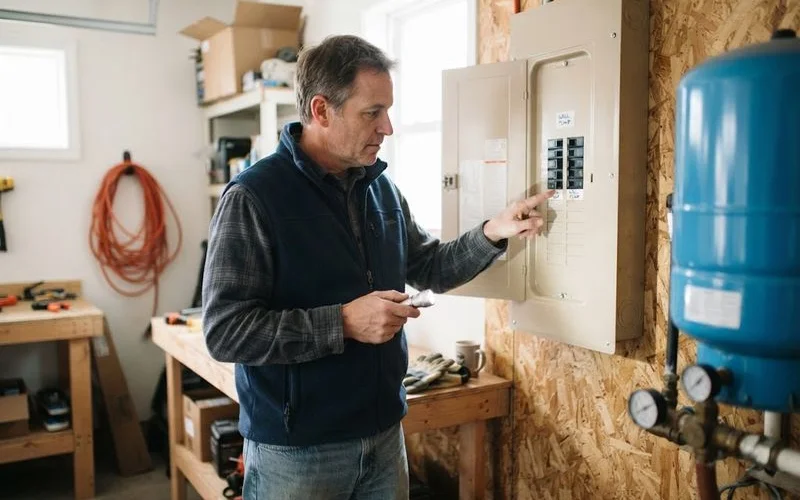
Safety first, always
Cut power at the breaker before touching anything electrical, and confirm it is off. Never work on a pressurized tank or line. Wells can also be confined or contaminated spaces, and removing a cap invites debris and bacteria into the water supply. If you are tempted to open the wellhead, call someone instead.
What to have ready when you call
Share your notes: pressure readings, cycling pattern, how long the issue has lasted and anything that changed recently. Say whether you have a jet pump or a submersible, if you know. Reviewers of local companies often mention clear communication and crews that explain the problem before fixing it, and a prepared caller makes that conversation easier.
When you are ready to compare, browse well pump repair and replacement providers for Bonner County. For how we rate listings, see our methodology, and the home page lists everything else we cover.
FAQ
- What can I safely check on my own?
- Look at the breaker, read the pressure gauge, inspect the whole-house filter, check for visible leaks and note any sounds or cycling patterns. These checks involve no opening of electrical boxes or pulling equipment.
- Is it safe to pull a submersible pump myself?
- It is heavy, deep and tied to live wiring. Most homeowners are better served by a provider with the right equipment. Mistakes can drop a pump down the well or cause electrical hazards.
- Will a DIY attempt affect a warranty?
- It can. Manufacturer and installer warranties often have conditions about who performs the work. Check your paperwork before you open anything.
- How do I know if I am in over my head?
- If a task involves line voltage, pulling pipe from the well, or you are unsure what you are looking at, stop and call. A short diagnostic visit costs less than a damaged pump.